
A collaboration between WWF-Vietnam, Sepon Group, and local government has created Quang Tri’s first formal tung seed export channel, improving incomes for ethnic minority households and reducing pressure on forests.
Tung oil is a natural drying oil extracted from the seeds of the tung tree. Used for centuries in Asia, it hardens on exposure to air into a waterproof, durable finish. Today it is in growing global demand for wood finishes, paints, coatings, as well as for security printing. It’s also gaining momentum in electronics and biofuels – valued as a non-toxic, renewable alternative to petroleum-based products. Second only to China, Vietnam is emerging as a significant producer.
Tung trees grow widely across the Truong Son range in Quang Tri province, central Vietnam. Paco and Van Kieu ethnic minority communities have long collected and sold the seeds, but with no structured market access, they depended entirely on middlemen. Prices fluctuated, demand was unreliable, and income remained low.
“The price depended on whatever the middlemen offered. Some years it was high, some years low — we never earned much.”
— Van Kieu community member, Quang Tri province
From Local Harvest to International Export
In 2025, WWF-Vietnam brokered a connection between communities, Quang Tri Trading Corporation (Sepon Group), and local authorities. Sepon Group committed to purchasing tung seeds at 2,000 VND/kg (8 USD cents) above market price, giving collectors a stable and improved return.
In November 2025, the first two containers of tung seeds were shipped from Tien Sa Port in Da Nang to India. This was the region’s first official tung seed export, demonstrating that non-timber forest products from central Vietnam can reach international markets through formal trade channels.
Building a Value Chain Along the Truong Son Range
Quang Tri has mapped over 8,000 hectares of tung trees along the Truong Son range and plans to expand growing areas while strengthening the value chain from harvest through processing to export. The chain is expected to generate income for at least 2,000 mountain households. WWF-Vietnam is encouraging partner enterprises to invest in deep processing to increase the local value added.
Women Leading the Harvest
Over 90% of tung seed collectors are women from Paco and Van Kieu communities. A reliable market gives them direct economic agency and strengthens the case for forest protection over slash-and-burn agriculture.
“If there are businesses buying tung seeds, we women feel more secure about planting and protecting the forest. We depend on the forest, so we must protect it together.”
— Paco community member, Quang Tri province
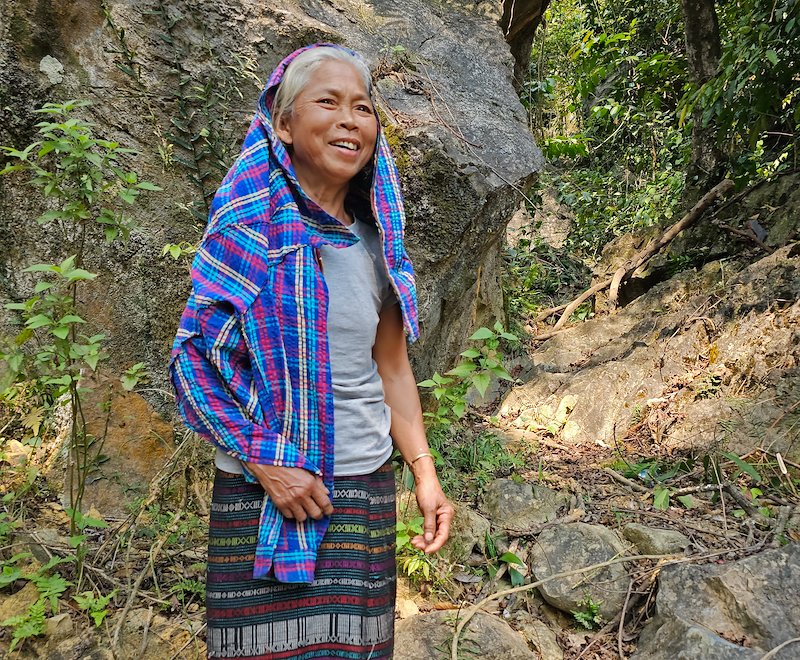
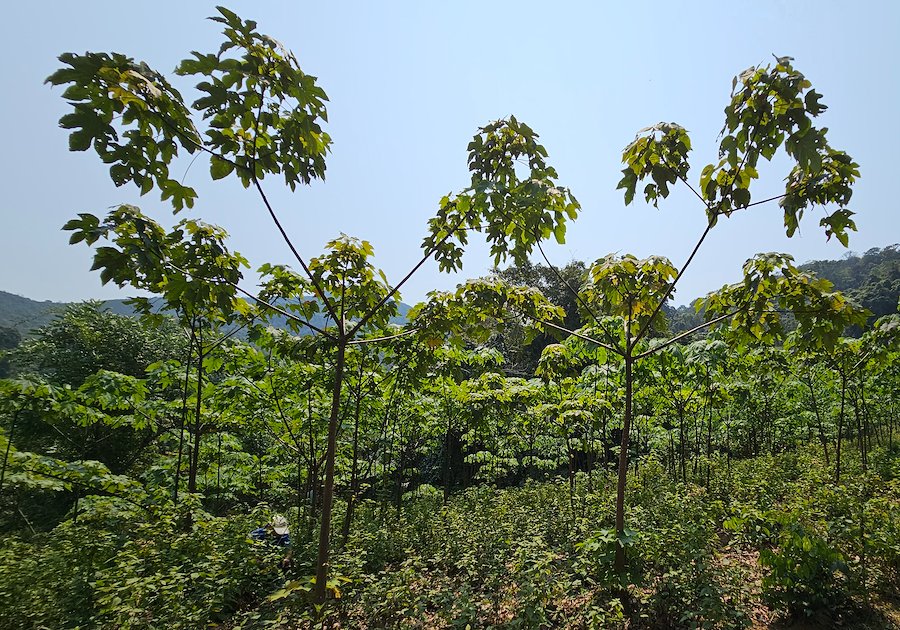
Dinh (left) and her plantation of tung trees near Trang Ta Puong village. Photo credits: © Miguel Lopes @voodoolx
LRF’s Role
As part of its landscape programme in the Central Annamites, the LRF connected an Indian buyer with a local processor, resulting in the sale of 60 tonnes of dried tung seeds, and further commitments to buy tung seeds and oil. So far, it is estimated that over 1,000 households have benefited from the increased demand and higher prices for tung seeds.