Impact Framework
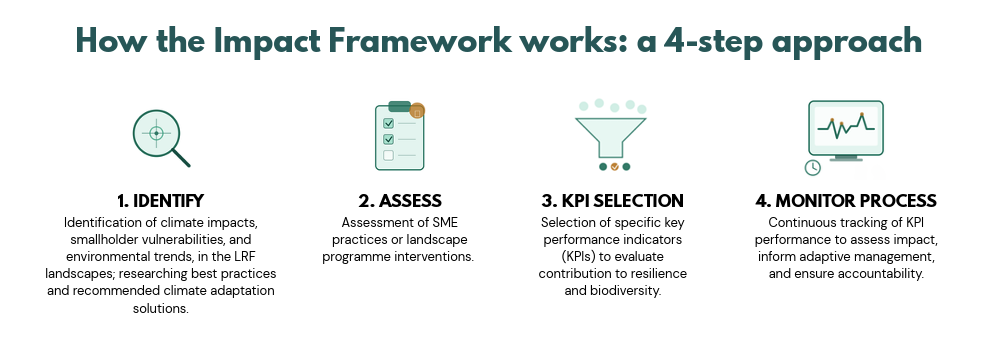
The LRF Impact Framework tracks progress across landscapes and SMEs consistently. It provides a structured approach to analyse how SMEs and landscape programmes contribute to climate resilience, and informs the design of monitoring plans to track and communicate on project success.
Why we measure?
The mission of the LRF is to enable the most vulnerable people in rural landscapes to adapt effectively to climate change. We pursue this through two complementary pillars:
- SME support — loans and technical assistance to small and medium enterprises that increase climate resilience through sustainable land management, livelihood diversification and job creation.
- Landscape activities — funding for landscape-level work that improves governance, strengthens supply chains, mobilises finance and creates an enabling environment for SME investment.
These two pillars operate at very different scales, and each landscape we work in has its own climate risks, crops, institutions and communities. The Impact Framework is what allows us to hold them to a common standard: to compare progress across a coffee cooperative in Vietnam and a landscape governance programme in Ghana, to understand what is working, and to be accountable to the farmers, communities and funders we serve.
Landscape Analysis
The KPI framework is complemented by landscape analyses that build a picture of the environmental and social context, trends and threats in each landscape, drawing on public data, satellite imagery and mapping.
These analyses can track restoration, environmental risks and social development data, and show how the LRF contributes to mobilising wider conservation efforts. They cover land use types, the location of LRF interventions and SME activities, conservation practices, climate impact trends, farmer adaptation, the government policy context, and the evolving socio-economic situation for farmers. Read more about the LRF landscape approach.
Learn more about the LRF’s Impact Framework by downloading the factsheet here below.