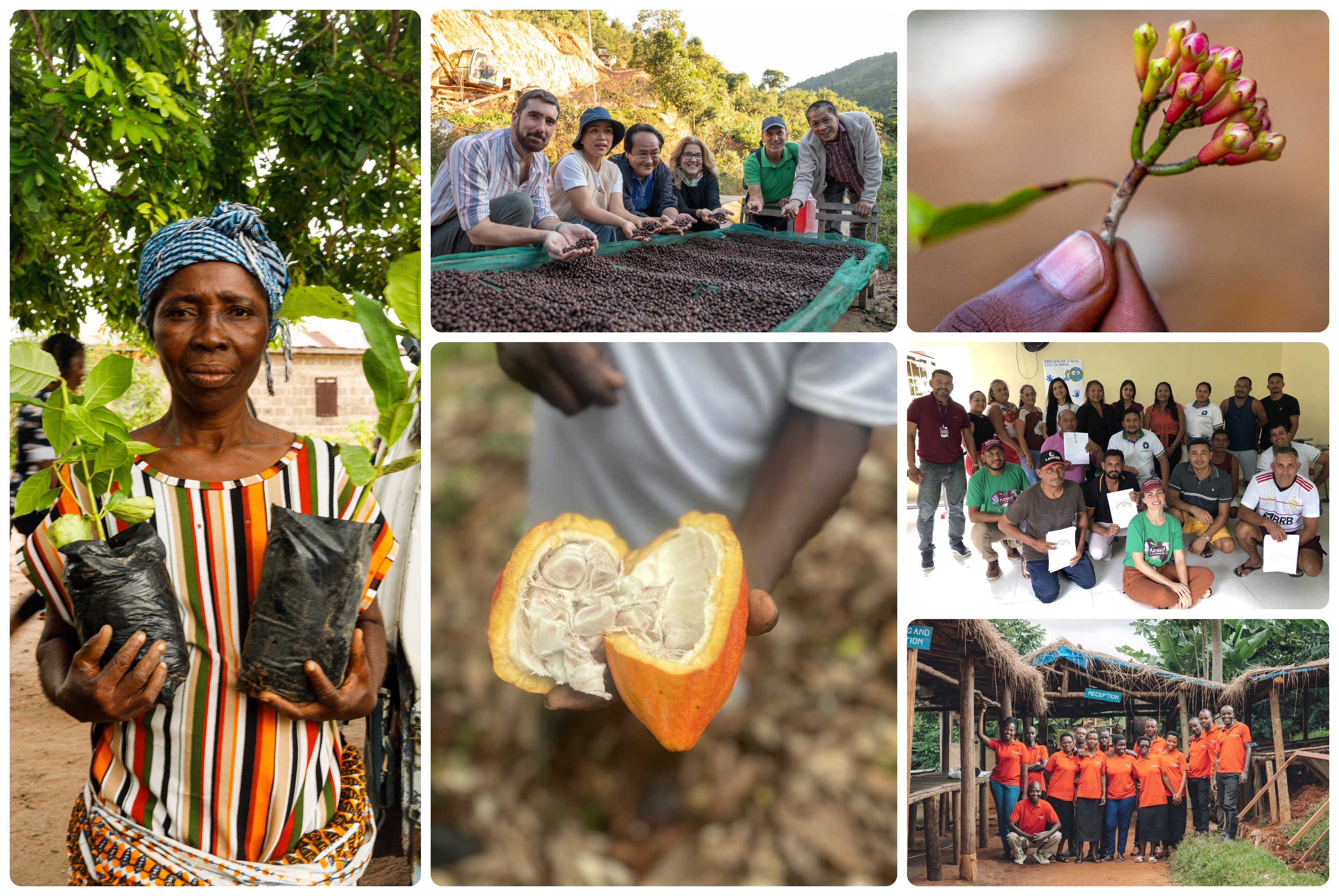
In 2025, the Landscape Resilience Fund (LRF) helped more than 14,000 farmers adopt climate-resilient practices, brought almost 13,000 hectares of land under sustainable management, and mobilised USD 23.9 million in additional finance for the people and landscapes most exposed to a changing climate. Our new 2025 Impact Highlights bring together the numbers — and the stories behind them — from another year of turning catalytic finance into resilience on the ground.
Climate adaptation remains chronically underfunded. Only a fraction of global climate finance reaches adaptation, and almost none of it comes from the private sector — even as the communities and supply chains in developing countries face the sharpest end of climate risk. Closing that gap is the reason the LRF exists.
Established in 2021 and delivered in partnership with WWF as founding and implementing partner, the LRF channels private and public finance to the small and medium-sized enterprises (SMEs) and landscape partners that help smallholder farmers adapt — then recycles repaid loans into new projects, so each dollar can work more than once.
What we achieved in 2025
Building on impact accumulated since 2021, the fund’s cumulative results now include:
- 14,162 farmers trained in sustainable landscape management — agroforestry, crop diversification and reduced tillage
- 4,768 farmers with improved livelihoods and more resilient incomes
- 12,924 hectares of land transformed or maintained under sustainable management
- 269 jobs created or supported this year
- USD 23.9 million in additional finance mobilised at SME and landscape level
These results flow from three interconnected pillars: landscape development — strengthening governance, supply chains and multi-stakeholder platforms; investment readiness — grants that prepare climate-resilient SMEs to raise capital; and concessional loans — low-interest, flexible finance for SMEs working with smallholders.
Where we work
In 2025 the LRF worked across three active landscapes — the Central Annamites in Vietnam, Kakum in Ghana, and Pará/Tapajós in the Brazilian Amazon — while the gains from an earlier landscape in Espírito Santo, Brazil, continue to endure. In each, WWF and local partners connect farmers, businesses and governments around a shared, long-term vision for people and nature.
The stories behind the numbers
The figures tell part of the story; the rest is happening in the field.
Small grants, big impact. Between 2021 and 2025, a technical-assistance program funded by the Global Environment Facility (GEF) supported nine climate-resilient SMEs across seven countries. The result: USD 5.8 million in private capital mobilised, more than 3,000 farmers trained, and a 1:9 leverage ratio — evidence that structured pre-investment support is among the most catalytic tools in adaptation finance.
A seed worth protecting. In Vietnam’s Central Annamites, a collaboration between WWF-Vietnam, the Sepon Group and local government opened Quảng Trị’s first formal tung-seed export channel in November 2025, lifting prices for more than 1,000 households.
New value from cocoa. In Ghana’s Kakum landscape, LRF partner Koa turns cocoa pulp — once left to waste — into juice, concentrate and powder, and in 2025 launched the world’s first cocoa-fruit juice shots in Europe. To date, Koa has purchased from 4,757 farmers and paid out over USD 1 million for a crop that previously had no cash value.
“A landscape is far more than its land. Its real power comes from people — communities, farmers, governments and businesses — choosing to work together.”
— Thibault Ledecq, Chief Conservation Director, WWF Vietnam
Looking ahead
Every repaid loan is recycled into new projects, and every landscape we support is a step toward a self-sustaining way to finance climate adaptation where it is needed most. As the adaptation finance gap continues to widen, the case for catalytic, locally-rooted investment has never been stronger.
Read the full 2025 Impact Highlights (PDF):
Photo credits cover image: from left to right, from up to bottom – Distribution of tropical almond seedlings to women farmers in the Volta Region. Photo credits: © Talmond. // Mrs. Tram (Pun Coffee) with the LRF Board and WWF staff during a field visit. Photo credits: © WWF-Việt Nam. // Cloves. Photo credits: © Trianon Spices. // An opened cocoa pod. Photo credits: © Landscape Resilience Fund. // Technical Assistance training. Photo credits: © Nossa Fruits. // Long Miles team during a TA workshop. Photo credits: © Long Miles Coffee.